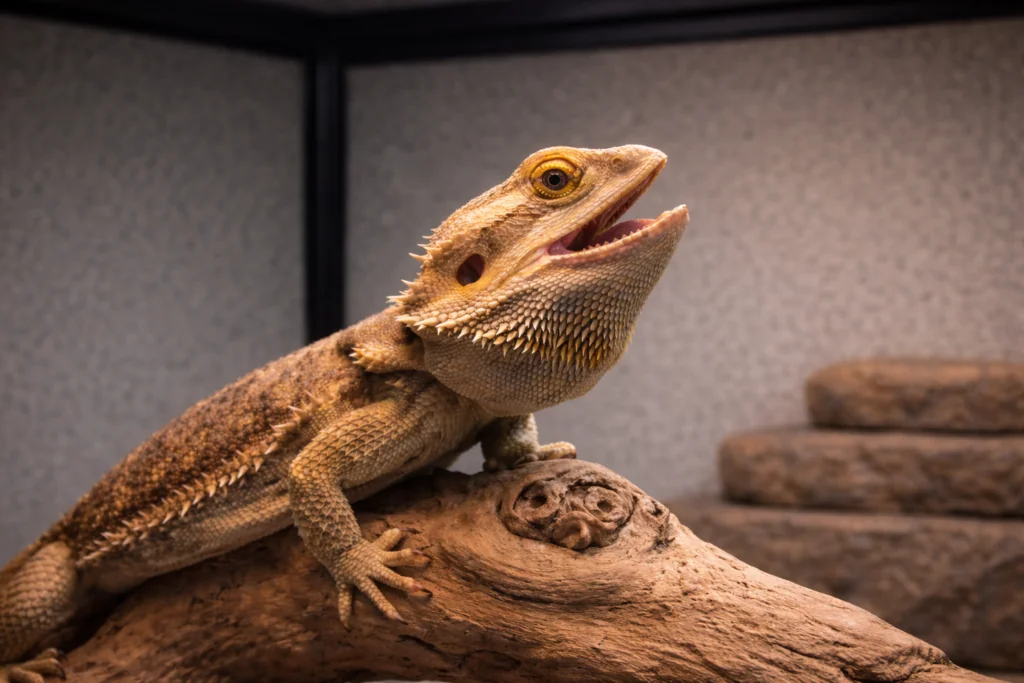
Bearded Dragon Mouth Open (Gaping) — Expert Guide. If you’ve ever noticed your bearded dragon sitting with its mouth open, you might feel concerned. Is it normal? Is your pet in distress? The truth is, bearded dragon gaping can be completely harmless—or a sign that something needs attention.
In this expert guide, we’ll break down everything you need to know about bearded dragon mouth open behavior, including causes, warning signs, and how to ensure your reptile stays healthy and comfortable.
What Does It Mean When a Bearded Dragon’s Mouth Is Open?
When a bearded dragon holds its mouth open, this behavior is commonly referred to as “gaping.” In many cases, it’s a natural and healthy response. However, context matters.
When a bearded dragon holds its mouth open, keepers commonly refer to this behavior as gaping. The term simply describes an open-mouth posture and, by itself, doesn’t imply anything is wrong. What matters is why it’s happening and what else is going on at the same time.
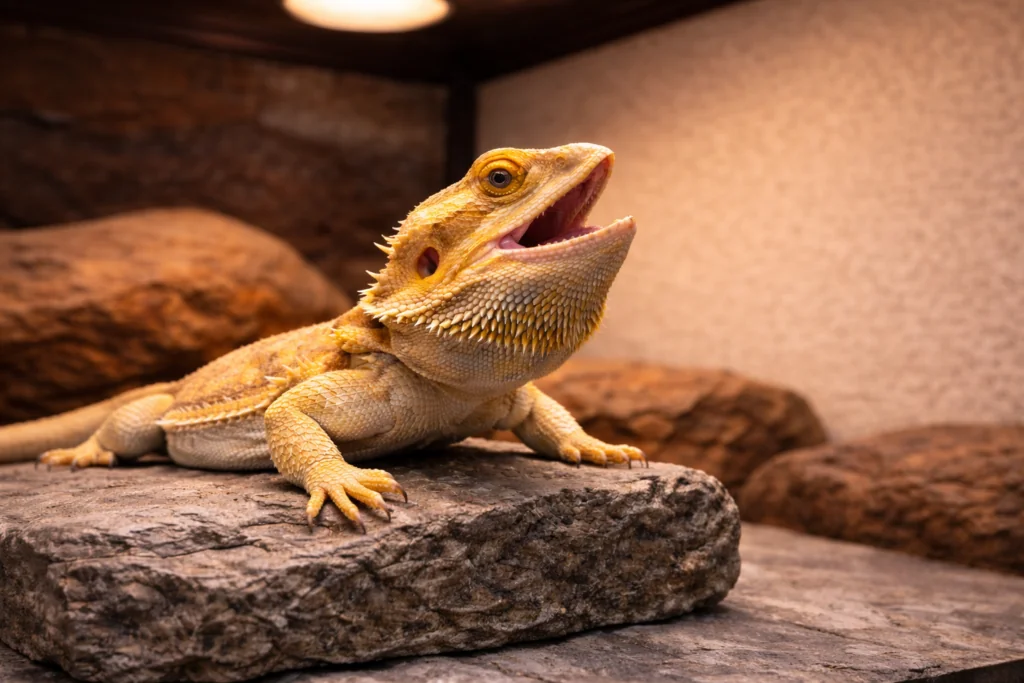
Bearded dragons don’t regulate body temperature internally the way mammals do. Instead, they rely on external heat sources and behavioral adjustments to warm up or cool down. Opening the mouth is one of those adjustments. Once a dragon reaches a comfortable body temperature, holding the mouth open helps release excess heat more efficiently.
This is why gaping is most often seen while a bearded dragon is basking under its heat source. In that context, an open mouth is usually part of normal thermoregulation, not a sign of distress.
However, the term “gaping” is sometimes used too broadly. Bearded dragons can also hold their mouths open in situations unrelated to temperature, including stress or illness. The open mouth itself isn’t the deciding factor—the surrounding context is.
Understanding what gaping means, and when it makes sense, creates the foundation for telling normal behavior apart from situations that deserve closer attention.
The most common reasons include:
- Regulating body temperature
- Displaying dominance or defense
- Responding to stress or illness
Understanding the difference is key to proper care.
1. Thermoregulation (The Most Common Reason)
Bearded dragons are cold-blooded reptiles, meaning they rely on external heat sources to control their body temperature.
When your dragon sits under a basking light and opens its mouth, it’s essentially cooling itself down—just like a dog panting.
Signs of normal gaping:
- Occurs under the basking light
- Body appears relaxed
- No unusual sounds or mucus
- Mouth closes after leaving the heat
✅ This is completely normal behavior and nothing to worry about.
2. Defensive or Territorial Behavior
Sometimes, an open mouth is a warning sign—literally.
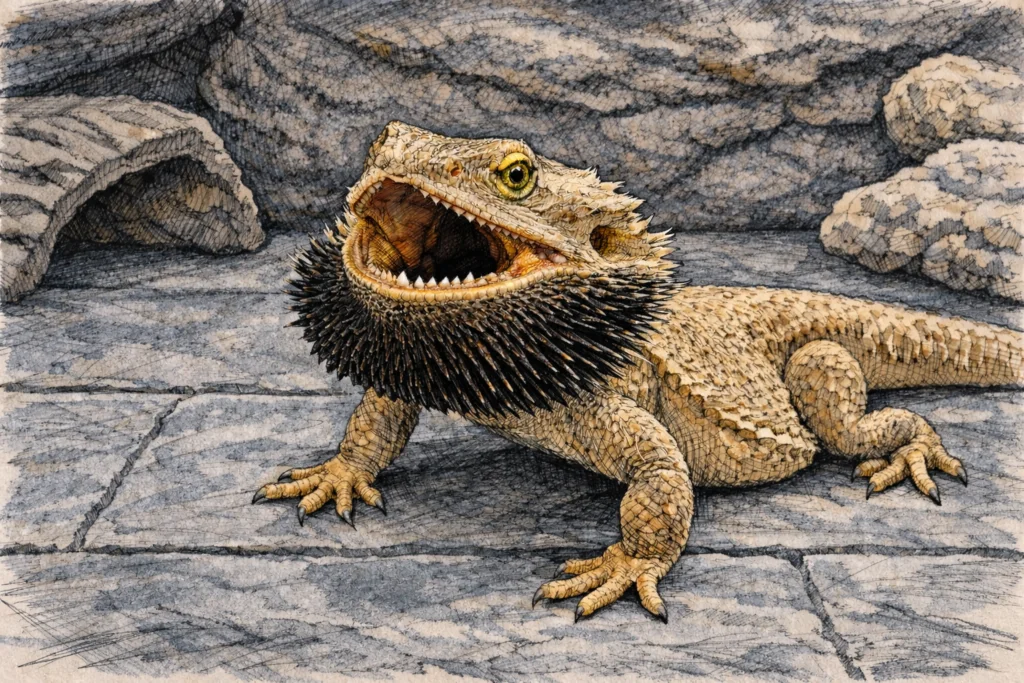
If your bearded dragon feels threatened, it may:
- Open its mouth wide
- Puff up its beard (often turning black)
- Flatten its body
This is a defensive display meant to scare off predators (or even you, if it feels unsafe).
What to do:
- Avoid sudden movements
- Give your dragon space
- Handle gently and consistently to build trust
3. Stress or Environmental Issues
Gaping can also be triggered by stress caused by:
- Incorrect tank temperatures
- Poor lighting (UVB issues)
- Overcrowding or loud environments
Check your setup:
- Basking temperature: 38–42°C (100–108°F)
- Cool side: 22–26°C (72–78°F)
- Proper UVB lighting installed
⚠️ Poor husbandry is one of the leading causes of abnormal reptile behavior.
4. Respiratory Infections (Serious Concern)
If your bearded dragon frequently keeps its mouth open outside of basking, it could indicate a respiratory infection.
Warning signs:
- Wheezing or clicking sounds
- Mucus around the mouth or nose
- Lethargy
- Loss of appetite
🚨 This requires immediate veterinary attention.
5. Mouth Rot (Infectious Stomatitis)
Another health issue linked to an open mouth is mouth rot, a bacterial infection affecting the gums and oral tissue.
Symptoms include:
- Swollen or discolored gums
- Pus or discharge
- Difficulty eating
- Persistent gaping
Early treatment is crucial to prevent serious complications.
When Should You Be Worried?
You should take action if:
- Gaping happens away from heat sources
- Your dragon seems weak or inactive
- There are unusual sounds, discharge, or swelling
- Appetite suddenly decreases
When in doubt, consult a reptile veterinarian.
How to Prevent Problems
Keeping your bearded dragon healthy starts with proper care:
Essential tips:
- Maintain correct temperature gradients
- Use high-quality UVB lighting
- Keep the enclosure clean and dry
- Provide a balanced diet (insects + greens)
- Schedule regular health checks
Final Thoughts
Seeing your bearded dragon with its mouth open isn’t always a cause for concern. In fact, in most cases, it’s simply your pet regulating its body temperature.
However, as a responsible owner, it’s important to recognize when this behavior signals something more serious. By understanding the difference between normal gaping and warning signs, you can ensure your bearded dragon lives a long, healthy life.
Seeing your bearded dragon sitting with its mouth open can be unsettling—especially if you’re new to reptile care. Owners often wonder whether it’s a sign of overheating, stress, or a breathing problem that needs immediate attention.
An open mouth in bearded dragons can mean very different things depending on where, when, and how it happens. In some situations, it’s part of normal behavior. In others, it can point to environmental problems or health concerns that shouldn’t be ignored.
This guide walks through the most common reasons bearded dragons hold their mouths open, how to interpret the surrounding context, and which signals actually matter. By understanding the patterns behind this behavior, you’ll be able to tell when everything is functioning normally—and when it’s time to step in or consult a reptile veterinarian.